


Automotive Lighting Dispensing and Sealing
Precision UV adhesive bonding, hot-melt sealing, thermal interface dispensing and lens bonding for automotive LED headlamps, rear lamps, DRL modules and interior lighting assemblies.
Comprehensive Dispensing Solutions for Automotive LED Lighting Assembly
Automotive lighting has been fundamentally transformed by LED and laser light sources. Modern LED headlamps, daytime running light (DRL) modules and matrix LED systems integrate LED arrays, optical lens systems, heat management structures, electronic driver PCBs and exterior lens panels — all sealed against moisture, dust and condensation cycles. Every interface in this assembly stack relies on precision-dispensed adhesives and sealants: thermal interface material between the LED substrate and heat sink, UV adhesive bonding the primary optic to the LED array, polyurethane or hot-melt sealing the lens to the housing, and silicone gaskets protecting the electronic driver compartment.
The dispensing challenge in automotive lighting is managing multiple material types across a large assembly footprint — a full headlamp housing can measure 400×200 mm — while maintaining the bead consistency needed for IP67 sealing and the volume accuracy needed for consistent thermal management. LED thermal management is particularly critical: a 10% variation in TIM bond line thickness translates to a 3–5°C variation in LED junction temperature, which directly affects LED lifetime and lumen maintenance over the 5,000–15,000 hour automotive lamp design life.
SANCO four-axial coating machines and DS series inline dispensing machines provide the large-format dispensing work envelope, multi-material capability and production throughput needed for automotive LED headlamp and rear lamp module assembly.
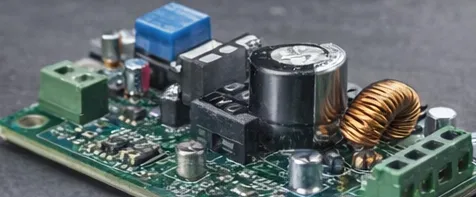
Why Automotive Lighting Dispensing Demands Multi-Material Precision
Automotive lighting assembly combines large-format adhesive bonding, IP sealing and thermal management dispensing — each with different materials and precision requirements — on the same housing.
Large-Format Housing Dispensing
Full-size automotive headlamp housings measure up to 600×300 mm. The dispensing machine must cover the full housing perimeter in a single programme without repositioning — maintaining ±0.3 mm path accuracy across the entire span.
LED Thermal Management Consistency
TCA bond line variation of ±0.05 mm across the LED array produces a ±3–5°C Tj variation that causes differential lumen depreciation — visible as non-uniform brightness across the lamp aperture after 2,000+ hours. TIM dispensing thickness control is a primary quality parameter.
IP67 Lens-to-Housing Seal on Complex Profiles
The lens bonding flange of automotive headlamps follows complex 3D profiles with compound curves, inside radii and oblique surfaces. The sealant bead must maintain consistent cross-section around all geometries for IP67 compliance.
Hot-Melt Dispensing Temperature Control
Hot-melt adhesive for headlamp lens bonding is dispensed at 150–200°C. Material temperature must be maintained within ±5°C to prevent premature skinning (too cold) or excess flow and stringing (too hot).
UV Adhesive Cure Time vs. Lens Positioning
UV adhesive applied to primary optic surfaces must remain fluid long enough for positioning with sub-0.1 mm accuracy, but cure completely within the UV exposure window. Working time, UV dose and intensity must be validated together.
Automotive Lifetime Requirement — 5,000 to 15,000 Hours
Automotive lamp adhesives must maintain performance across the full 10–15 year vehicle lifetime, including 1,000+ thermal cycles from -40°C to +100°C. Material qualification to LV124 and USCAR-2 standards is required before production release.
Key Capabilities for Automotive Lighting Dispensing and Sealing
Large-Format Work Envelope up to 600×400 mm
Covers full-size automotive headlamp and rear lamp housing perimeters in a single programme — maintaining ±0.3 mm path accuracy across the full working area.
TIM Bond Line Thickness Control ±0.05 mm
Closed-loop dispensing height control maintains thermally conductive adhesive bond line thickness within ±0.05 mm across the LED array footprint — directly controlling LED junction temperature uniformity.
Hot-Melt Temperature Control ±5°C
Heated barrel and nozzle system maintains hot-melt adhesive at target dispensing temperature within ±5°C, preventing premature skinning and stringing on automotive lens bonding applications.
3D Path Interpolation for Compound Curves
Simultaneous X/Y/Z interpolation tracks complex 3D headlamp housing sealing flanges — maintaining consistent sealant bead cross-section around all compound curves and inside radii for IP67 compliance.
UV Pre-Cure Integration for Lens Bond
Integrated UV cure head locks UV adhesive position immediately after lens placement — freezing the optic in its aligned position before mechanical holding fixtures are released.
Multi-Material: TIM / UV / Hot-Melt / Silicone
Handles TCA, UV lens bond adhesive, hot-melt housing sealant and silicone driver compartment seal from interchangeable valve configurations on the same machine platform.
Housing CAD Import for Path Generation
Import headlamp housing 3D CAD to auto-generate dispensing toolpaths for all sealing flanges, LED array TIM patterns and lens bond beads.
Inline Lamp Assembly Line Integration
SMEMA-compatible conveyor integration links SANCO machines between LED substrate assembly, lens assembly and IP test stations in automated automotive lighting lines.
The Automotive Lighting Dispensing Process Step by Step
Automotive LED lamp assembly requires sequential dispensing of multiple materials across a large format housing. SANCO equipment covers all stages efficiently.
Housing Fixture & Vision Alignment
Lamp housing fixtured and CCD vision captures datum features. Dispensing paths for TIM, lens bond and housing seal all calculated and verified.
LED TIM Dispensing
TCA dispensed on LED heat sink pad in controlled area pattern. Bond line thickness controlled to ±0.05 mm for uniform thermal performance across all units.
Lens Bond Bead & Housing Seal
UV adhesive or PU bead dispensed on lens bonding flange. Hot-melt or UV silicone sealant dispensed in housing channel for IP67 perimeter seal.
Lens Assembly & UV Cure
Lens positioned and assembled within adhesive open time. UV cure in 10–30 seconds locks bond and seals perimeter simultaneously.
IP67 & Photometric Test
IP67 water ingress test and photometric beam pattern test verify the assembled lamp meets ECE regulation and OEM specification before shipment.
Automotive Lighting Dispensing Material Types & SANCO Compatibility
SANCO dispensing machines handle all adhesive, sealant and thermal interface materials used in automotive LED headlamp and rear lamp assembly.
| Material Type | Viscosity Range | Cure Method | Typical Application | SANCO Compatibility |
|---|---|---|---|---|
| Thermally Conductive Adhesive (TCA) | 10,000 – 80,000 mPa·s | Thermal 80–120°C, 30–60 min | LED array-to-heat sink bonding in headlamps and DRL modules; 1–5 W/m·K thermal conductivity grades | Recommended |
| UV Adhesive (Lens Bonding) | 500 – 15,000 mPa·s | UV 365–405 nm, 10–30 s | Primary optic and cover lens bonding; active alignment lock for precision LED optic assemblies | Recommended |
| Hot-Melt Adhesive (Lens Sealing) | Thermoplastic, 1,000–5,000 mPa·s @ 180°C | Solidification on cooling, 30–60 s | Lens-to-housing IP67 sealing bead for headlamp and rear lamp assemblies; excellent vibration resistance | Recommended |
| Polyurethane Housing Sealant | 10,000 – 100,000 mPa·s | Moisture / UV dual-cure | Housing perimeter and inner bezel sealing for IP67/IP68 automotive lamps in wet underbody applications | Recommended |
| Silicone Sealant (Driver Compartment) | 20,000 – 150,000 mPa·s | Moisture cure or UV | Electronic driver PCB compartment sealing within headlamp housing; -40°C to +150°C rated for engine bay lamps | Recommended |
Frequently Asked Questions
How does SANCO control LED TIM bond line thickness in headlamp assembly?
SANCO dispensing machines use closed-loop Z-axis height control referenced to the LED heat sink surface, maintaining the dispensing needle at a fixed standoff that produces target bond line thickness within ±0.05 mm. The dispensed TIM volume per unit is also monitored and logged. Contact our application engineers to discuss TIM dispensing validation for your LED module design.
Can SANCO machines dispense hot-melt adhesive for automotive headlamp lens sealing?
Yes. SANCO dispensing machines support hot-melt adhesive dispensing at 150–200°C through heated barrel and nozzle configurations maintained within ±5°C. The nozzle anti-drip function prevents stringing between dispensing positions. The DS series inline machine is recommended for high-volume headlamp lines requiring continuous hot-melt throughput.
What work envelope does SANCO offer for full-size automotive headlamp housing dispensing?
SANCO four-axial machines and large-format dispensing platforms offer work envelopes up to 600×400 mm — sufficient to cover the full perimeter of even the largest automotive headlamp housing in a single programme without repositioning.
How does SANCO handle 3D compound curves on automotive headlamp housing flanges?
SANCO dispensing machines use simultaneous X/Y/Z path interpolation with Z-height profiles imported from housing 3D CAD data. The Z-axis tracks the flange elevation profile around compound curves and oblique surfaces, maintaining consistent needle standoff and bead cross-section throughout the full seal path.
Does SANCO dispensing equipment meet automotive LV124 environmental testing requirements?
SANCO machines support process development and validation for adhesive and sealant formulations qualified to LV124 and USCAR-2 automotive environmental standards. The machines' traceability logging supports correlation of process parameters to environmental test results during qualification.
Where can I find information on other automotive electronics dispensing applications?
Visit our Applications section for guides covering ECU encapsulation, conformal coating, RTV gasket forming, sensor sealing and camera/radar module bonding. For equipment, see our four-axial and DS series dispensing machine product pages.